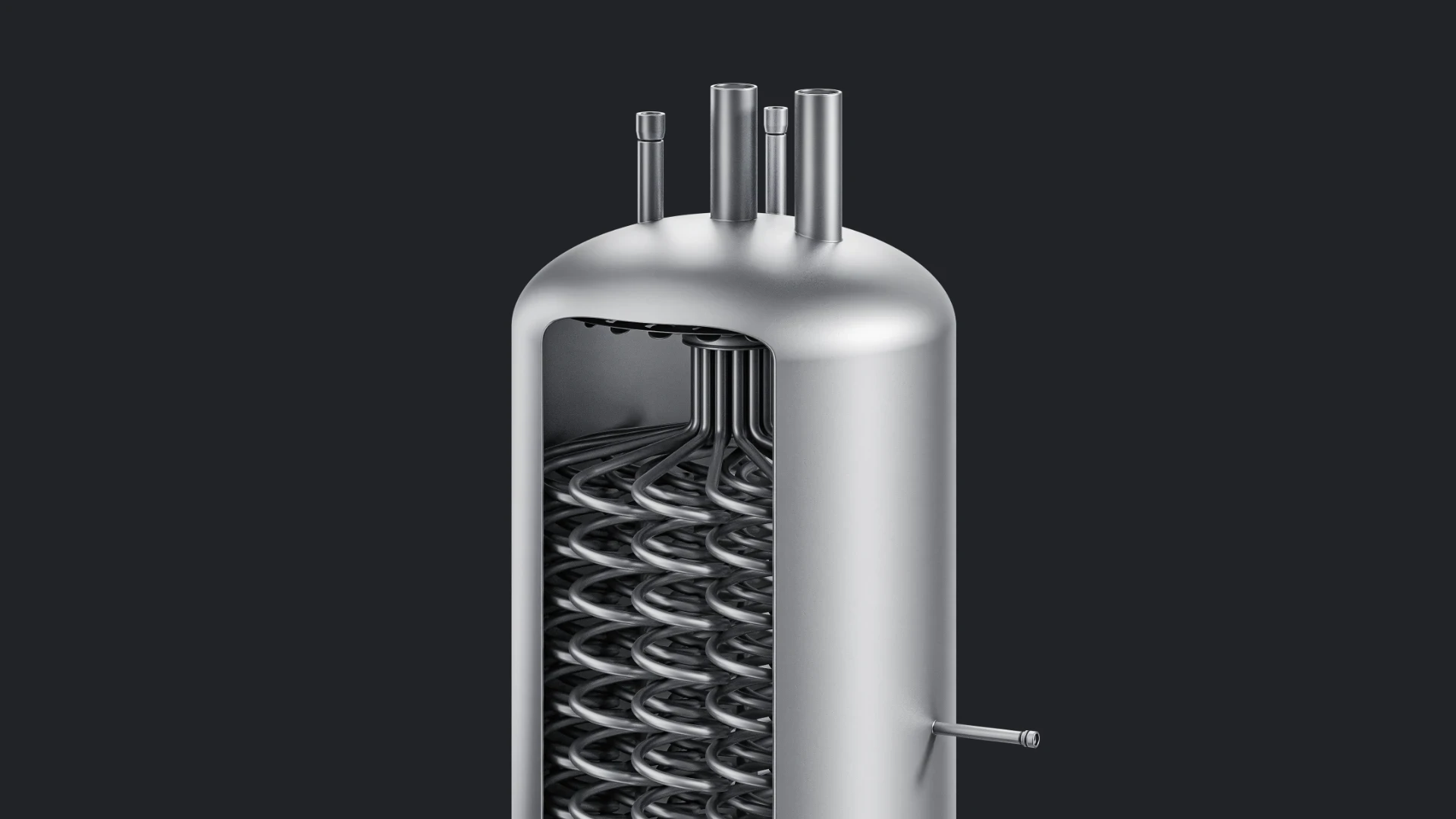
High-performance ASME pressure tank Developed for the North American market
Canada
Project date
Introduction
A premium 115-gallon ASME pressure tank with a high-efficiency multi-coil heat exchanger, designed for continuous, hygienic DHW production and superior fire-resistant durability in demanding installations.
The challenge
Our long-term business partner from Canada approached us with a request to design a new pressure tank to be introduced as a permanent product in their portfolio. With a strong understanding of their local market, the customer identified a clear gap: there was a lack of premium-class tanks that could clearly outperform competing solutions in terms of efficiency, durability, and safety. In short, they needed a top-tier product for the most demanding customers.
Apart from this general objective, the initial requirements were intentionally limited. The tank had to fit through a standard doorway, offer a volume of approximately 120 gallons, deliver high thermal performance, and ensure a high level of fire safety. The customer gave us full freedom in selecting materials, defining the tank geometry, nozzle arrangement, and overall design concept. Knowing that we were developing a premium product with a higher-than-average price target, we decided to create a truly distinctive solution.
The solution
We knew from the start that the performance of the tank would be defined primarily by the efficiency of its internal heat exchanger. In conventional tanks, the heat exchanger is typically made from a single long tube, usually with a diameter of 25–32 mm for tanks of this size. We decided to completely rethink this approach.
Our goal was to reduce the tube diameter, as a smaller hydraulic diameter improves heat transfer efficiency across the entire tube cross-section. However, using a 16 mm tube, which we selected for this project, would normally limit the achievable heat transfer area. To overcome this constraint, we changed the exchanger concept entirely.
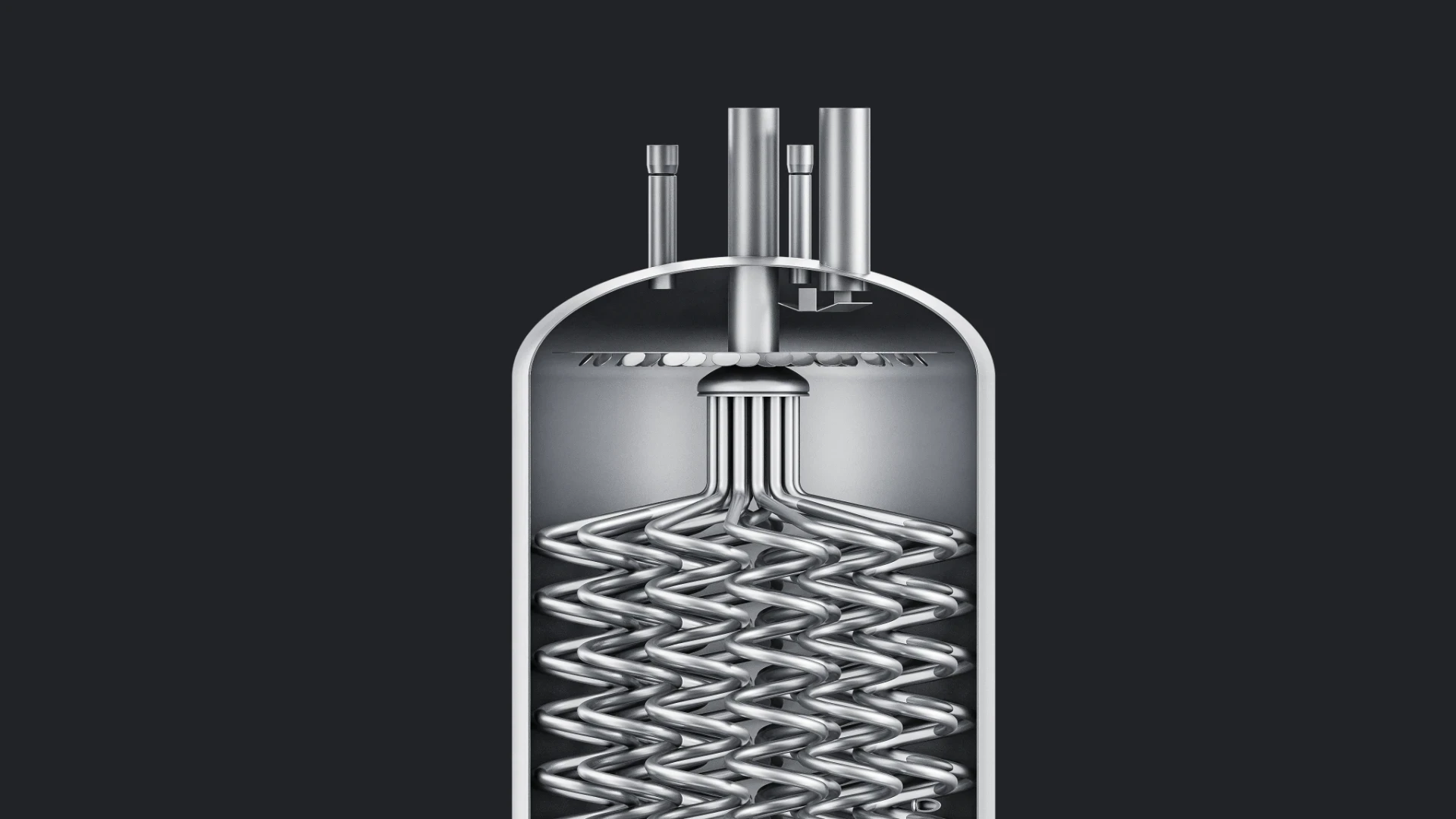
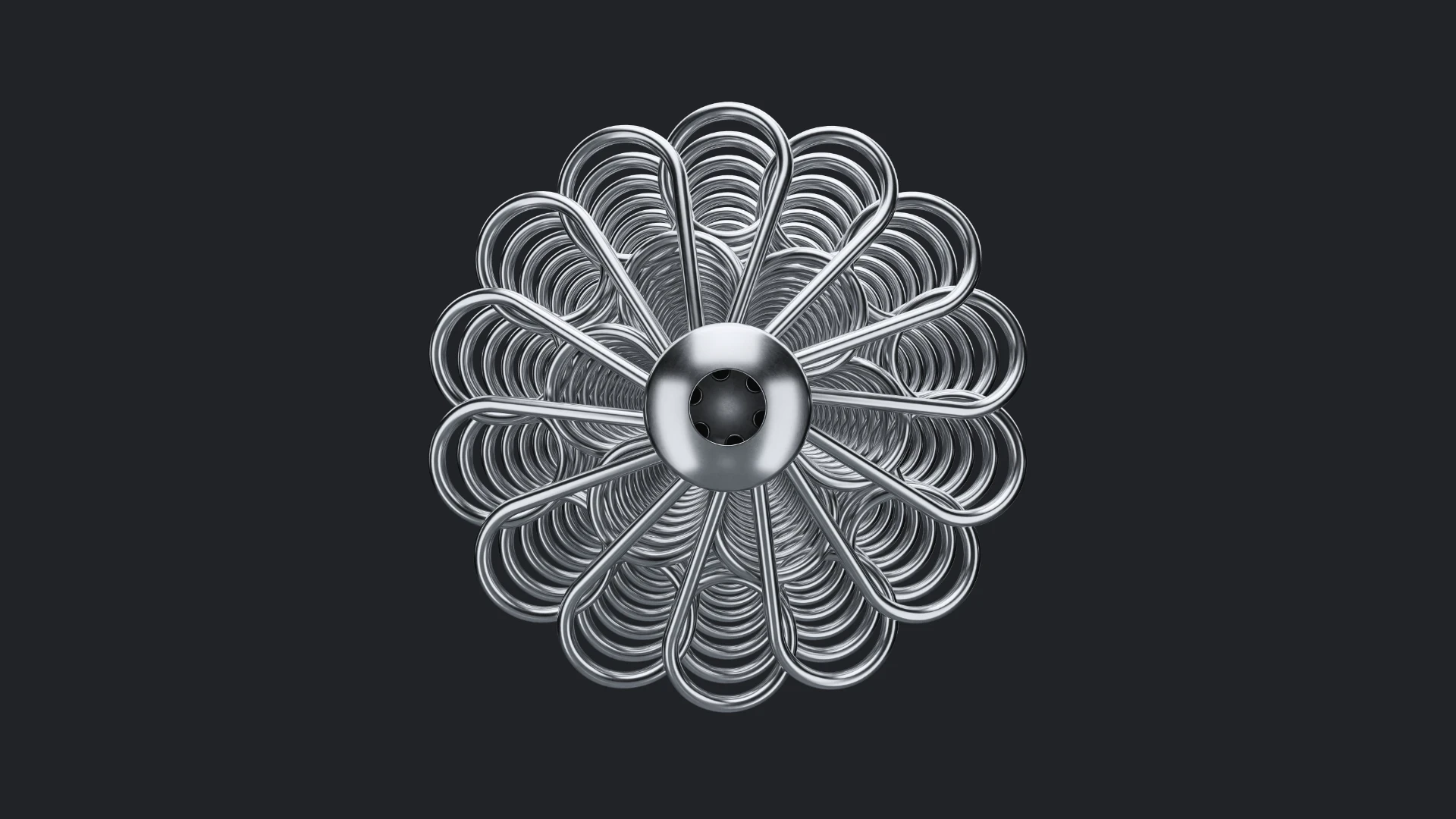
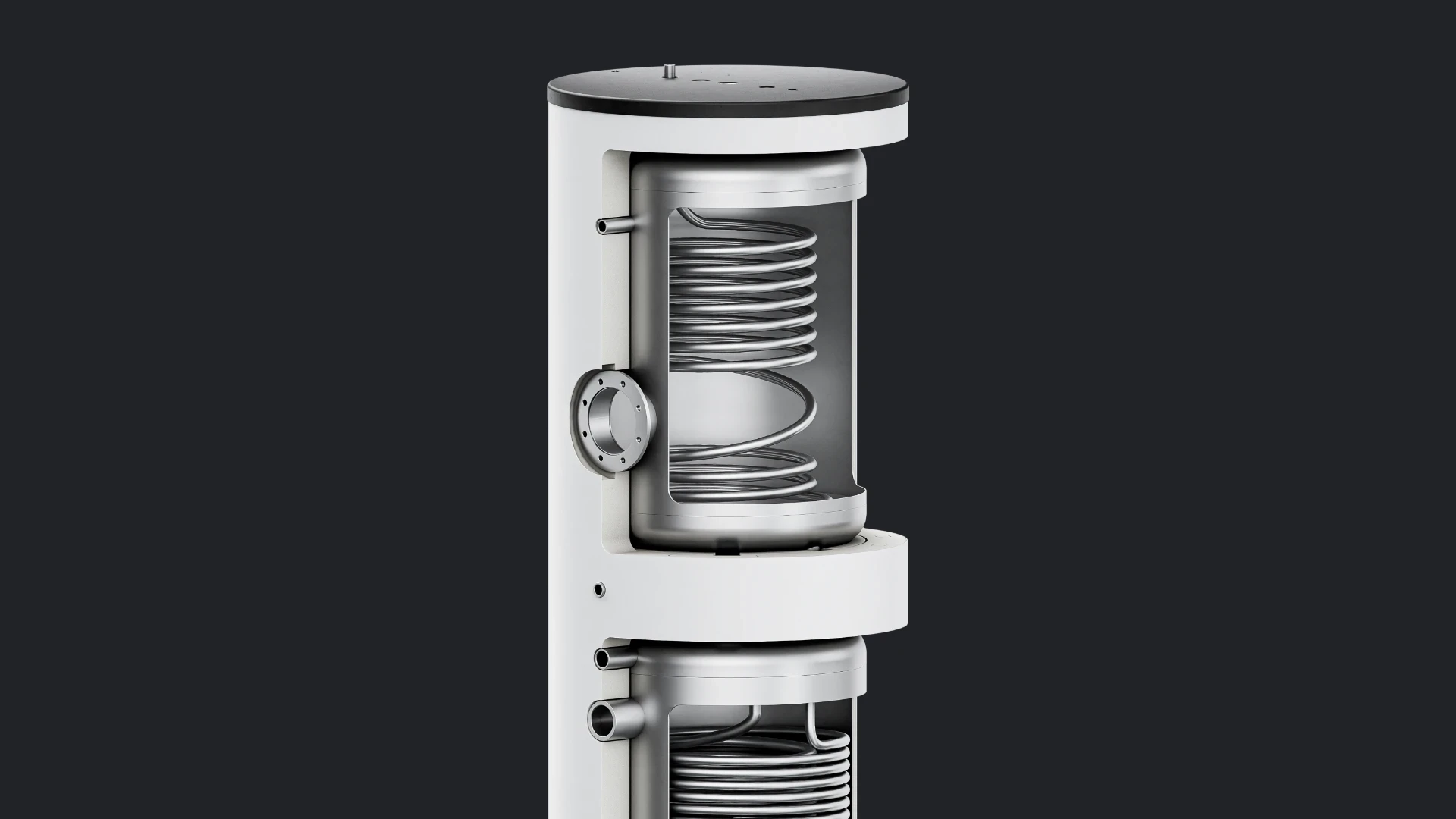
Instead of a single coil, we designed multiple smaller coils connected into a single, highly efficient heat exchanger. This configuration allows the coils to fill almost the entire volume of the tank, forcing the fluid in the shell side to flow between the tubes. As a result, we achieved a very large heat transfer area while using small-diameter tubes.
To ensure proper fluid distribution inside the shell, we introduced a dedicated internal baffle. Its geometry was validated before prototype manufacturing using CFD flow analysis.
Laboratory testing confirmed that the heat exchanger was efficient enough to support continuous water heating. This allowed us to reverse the conventional tank operating principle. Instead of storing domestic hot water in the shell, we used the shell volume as a buffer for heating water, while domestic water was heated instantaneously as it flowed through the coil, only when demand occurred.
This configuration completely eliminates domestic water stagnation, significantly reducing the risk of Legionella growth and removing the need for periodic thermal disinfection cycles.
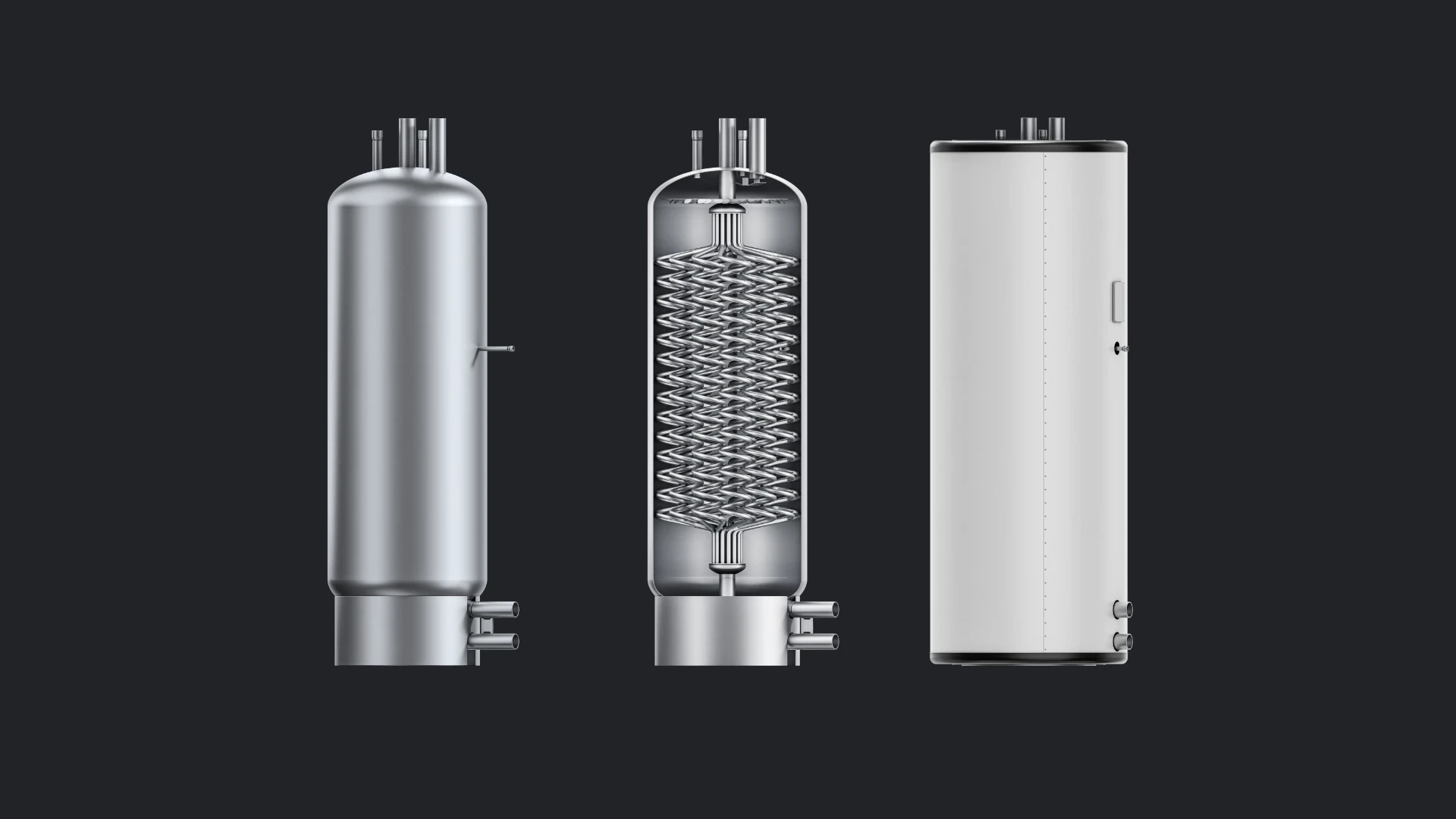
The tank was designed in accordance with ASME Section VIII, enabling the customer to market the product across North America. The final tank volume was 115 gallons (435 liters), while the total heat transfer area of the coil reached 62.4 sq ft (5.8 m²), resulting in an excellent surface-area-to-volume ratio.
For materials, we selected austenitic stainless steel 304L (low carbon) for the coils and duplex stainless steel S32101 for the pressure vessel. These materials were chosen for their proven corrosion resistance, mechanical strength, and long service life.
Fire resistance was one of the key customer requirements for the external components of the tank. Among all insulation materials, mineral wool offers the best fire performance. We selected mineral wool insulation with reaction to fire class A1 according to EN 14303, suitable for continuous operation at temperatures up to 500°C.
Standard plastic jackets were intentionally avoided, as they would contradict the fire-resistance concept. Instead, the insulation jacket and top and bottom covers were manufactured from galvanized carbon steel with powder coating. This solution provides excellent fire resistance, high mechanical durability, and a premium visual finish.
The tank design also included additional nozzles for essential instrumentation, such as temperature sensors and a safety valve, ensuring correct and safe operation of the system.
The results
After completing the design phase and laboratory testing, we presented the first REX ASME units to the customer. The product was very well received by both the customer and the market.
The newly developed tank perfectly filled a niche in the premium pressure vessel segment and quickly achieved commercial success thanks to its clear technical advantages.
Due to its high thermal efficiency, the tank found applications in systems with heat pumps, gas boilers, and solar thermal installations. It proved particularly effective in low-temperature systems and in applications requiring efficient heat exchange between two media with very similar temperatures.
Thanks to its exceptional durability, covering both the pressure vessel and external components, as well as its high fire resistance, the REX ASME tank became a competitive solution for demanding installations and tender-based projects.
" height="18px" id="iWrNsKvvp" width="18px"/></svg>)
